Scheduling Strategy
Sling vs. When I Work: Why Teams Switch To When I Work

If you’re researching Sling (Getsling), you’ve probably been drawn in by the Sling free plan. It’s a practical starting point for small teams. However, some managers find that ‘free’ can mean more manual coordination and fewer built-in tools to support accountability.
In the Sling vs. When I Work comparison, the real question is simple. Are you just publishing a schedule, or are you using tools that help you save time, reduce labor costs, and stay in control?
Comparison overview
While both platforms fall under the broader category of employee scheduling software, the differences become more noticeable as scheduling needs become more complex and compliance requirements increase.
| Getsling (Sling) | When I Work | |
| Best for | Small teams getting started | Owners and managers who want built-in automation and labor visibility |
| Shift accountability | Geofencing | GPS and photo identity verification |
| Scheduling speed | Manual/template-heavy | One-click auto |
| Payroll sync | Basic CSV Exports | Direct API integrations (ADP, Gusto, QuickBooks, Rippling, and more) |
| Team messaging | Limited on free plan | Full team messaging on all plans |
What is Sling (Getsling)?
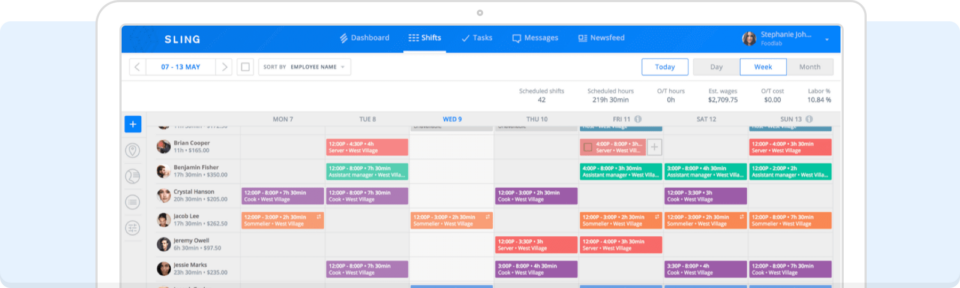
Rating: 4.4 / 5.0 according to G2 customer reviews
Sling is an employee scheduling software known primarily for its generous free plan (up to 30 users). It allows managers to move away from paper schedules using a drag-and-drop, color-coded interface. While it offers time tracking and messaging, certain scheduling, reporting, and accountability tools are reserved for paid Business tiers.
Key strength: Well-suited for small shops or teams with under 30 employees that mainly need a simple, manual shift-planning tool.
What is When I Work?
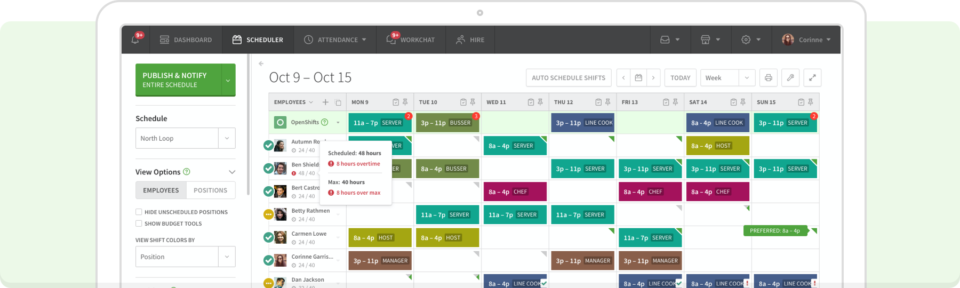
Rating: 4.4 / 5.0 according to G2 customer reviews
When I Work is an employee scheduling, time tracking, and team communication platform built for shift-based teams. It includes auto-scheduling that matches employees to shifts based on availability, role qualifications, and defined rules, helping managers build schedules faster and reduce manual adjustments.
Built for owners and managers who want automation, labor cost visibility, payroll connections, and accountability tools included without upgrading just to access the basics.
Sling vs. When I Work: Key differences
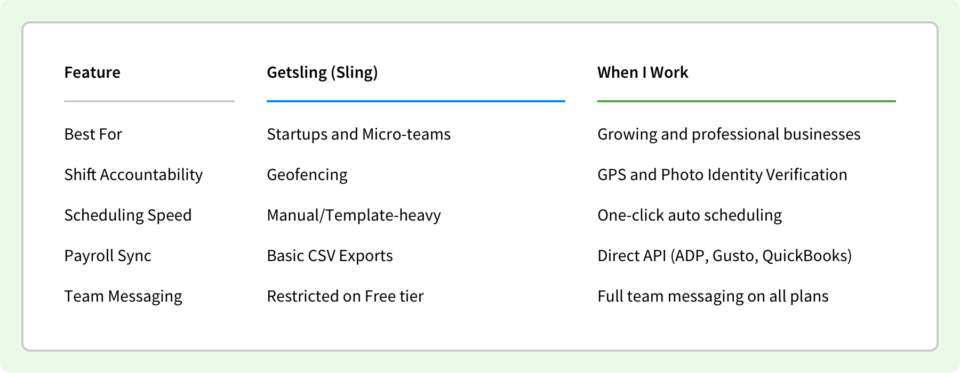
When comparing employee scheduling software like Sling vs. When I Work, the differences often show up in how each tool handles the daily challenges of shift management.
Employee scheduling: Automation vs. manual templates
The difference between manual scheduling and automated scheduling can significantly impact the time a manager spends building and adjusting schedules.
- Sling: Focuses on shift templates. You build a week, save it, and roll it over. It’s faster than paper but still requires manual oversight for rotation changes or availability conflicts.
- When I Work: Includes rule-based auto-scheduling. By setting rules for certifications, maximum hours, and availability, the system builds schedules based on your defined criteria. Instead of filling slots manually, managers can reduce scheduling time while improving coverage and labor visibility.
Managers moving from template-based scheduling to auto-scheduling often report cutting schedule build time by up to 50%, particularly in multi-location environments.
Team messaging: Secure coordination vs. restricted chat
Clear communication helps reduce no-shows and last-minute confusion across different shifts.
- Sling: Messaging is included, but some features may be restricted on the free tier. Private group threads or announcement tracking typically require a paid subscription.
- When I Work: Includes WorkChat in all plans. Teams can send one-to-one messages, group updates, and announcements tied directly to schedules. Read receipts help managers confirm who has seen important updates.
Time management: Identity verification vs. basic location
Keeping labor costs under control starts with accurate clock-ins. If you can’t verify who worked which shift, payroll errors and time theft become harder to detect and correct.
- Sling: Uses standard geofencing. It confirms an employee’s phone is near the job site, but it cannot verify who is holding the device.
When I Work: Offers photo verification at clock-in. Employees can be required to take a photo when clocking in, helping reduce buddy punching and strengthen accountability. For teams managing hourly staff, this added layer of verification can help protect payroll and improve time tracking accuracy.
Pricing: Value vs. entry price
When comparing shift scheduling software, focusing on entry price alone can be misleading if the software requires upgrades just to unlock everyday scheduling tools. A free plan can look appealing until messaging, availability tracking, or reliable time clocks are gated behind a higher tier.
- Sling pricing: Offers a free plan for up to 30 users, with limited functionality. Paid plans start at $1.70 per user, while features like expanded reporting and kiosk time clocks are reserved for higher Business tiers ($3.40 per user).
- When I Work pricing: Includes scheduling, messaging, availability management, and accountability tools across all paid plans. Instead of paying to unlock basics, you choose the plan structure that fits your team. Pricing starts at $2.50 per user for single-location teams, with multi-location plans available at $5.00 per user. Check the pricing options to see exactly what you get.
Many managers report saving up to 15 hours per week after switching to our automated scheduling, reclaiming hours each week that would otherwise be spent manually adjusting shifts or resolving coverage gaps.
In a Sling vs. When I Work comparison, the difference is whether you’re paying to unlock essentials or investing in tools that help you save time and control labor costs from the start.
*Pricing based on Sling’s publicly available pricing page (getsling.com/pricing).
Which app is best for you?
Both Sling and When I Work offer shift scheduling tools, but the right choice depends on how you want to manage coverage, accountability, and labor costs. Below is a practical breakdown of when each platform may be a better fit based on scheduling needs and the level of oversight you want built into your system.
Who should choose Sling?
Sling may be a good fit if:
- You manage a smaller team and want a free or low-cost starting point
- You’re comfortable building schedules manually using templates
- You don’t need photo verification at clock-in
- Basic messaging tools are enough for your team
Who should choose When I Work?
When I Work is the preferred choice if:
- You want auto-scheduling to reduce time spent building and adjusting shifts
- You want photo verification at clock-in to help prevent buddy punching
- You need labor cost visibility while building the schedule, including overtime alerts
- You want scheduling, messaging, and accountability tools included without upgrading to unlock the basics
- You require direct payroll integrations with providers like Rippling, ADP, or Gusto
FAQs: Choosing between Sling and When I Work
Choosing the right employee scheduling software can impact how much time you spend building schedules, managing callouts, and tracking labor costs. Below are common questions managers ask when comparing Sling and When I Work, including pricing, features, and what it takes to get started.
Why do teams switch from Getsling to When I Work?
Teams often move to When I Work when they want more built-in scheduling automation, stronger clock-in verification, and direct payroll integrations. As scheduling needs become more demanding, managers typically look for tools that reduce manual adjustments, improve accountability, and provide clearer visibility into labor costs while building the schedule.
While Sling works well as a basic scheduling tool, When I Work includes auto-scheduling, photo verification at clock-in, availability tracking, shift trading, and full team messaging across all paid plans. Instead of upgrading just to unlock everyday scheduling features, managers can focus on saving time, preventing payroll errors, and keeping shifts covered.
Is Sling really free?
Sling does offer a free plan, but feature access is limited. While you can build and publish schedules, basic tools like time tracking, labor cost reporting, and team messaging may require upgrading to a paid tier.
For some teams, the free plan is enough to replace paper schedules. However, as managers begin looking for stronger accountability tools, clearer labor visibility, or additional communication controls, they may find that those features sit behind higher-priced plans.
Does When I Work integrate with my payroll provider?
Yes. When I Work provides direct payroll integrations with ADP, Gusto, QuickBooks, and Rippling, so approved hours can move straight into your payroll system without manual re-entry.
Sling primarily relies on CSV exports for payroll processing, which means managers may need to download, upload, and reconcile timesheet data each pay period. If reducing payroll admin and minimizing manual errors is important to you, direct integrations can make a noticeable difference.
Is there a free trial for When I Work?
Yes. When I Work offers a fully-featured 14-day free trial. Unlike the permanent free tier from Sling, our trial gives you unrestricted access to our best tools, like auto-scheduling, so you can see the actual ROI before you commit.
Is Sling good for multi-location businesses?
Sling does support multiple locations, but plan structure and feature access may vary depending on how your team is set up. For businesses managing more than one site, visibility and consistent scheduling controls become increasingly important.
When I Work offers a dedicated multi-location plan that allows managers to oversee schedules across storefronts, departments, or job sites under one account. Instead of managing separate systems, you can maintain oversight while keeping scheduling, messaging, and time tracking aligned across locations.
Which is better for restaurants and healthcare?
Restaurants and healthcare teams often deal with shift changes, overtime exposure, and strict labor regulations. The right choice depends on how much automation and accountability you want built into your scheduling process.
Because these industries face high turnover and complex labor laws, When I Work is typically the stronger choice. Our advanced overtime tracking and labor forecasting help managers stay compliant and on budget in high-pressure environments.
Does Sling offer photo clock-in?
No. Sling relies on geofencing and mobile GPS to confirm a device is near the job site, but it does not verify the identity of the person clocking in.
When I Work includes optional photo verification at clock-in, allowing managers to confirm who is starting a shift. For teams concerned about buddy punching or time theft, identity verification adds an extra layer of accountability beyond location tracking alone.
How difficult is it to migrate from Sling to When I Work?
Migration is simple. Most teams export their employee data from Sling as a CSV file and upload it directly into When I Work. From there, you can assign roles, set availability rules, and publish your first automated schedule.
Many teams have their first schedule live within 20 minutes of starting the 14-day free trial. Because scheduling, messaging, and time tracking operate in one system, you don’t need a complex implementation process to get started.
The verdict
Sling can be a practical, low-cost way to replace paper schedules for smaller teams that only need basic shift planning.
However, if you want auto-scheduling, photo clock-in verification, labor cost visibility while building the schedule, and full team messaging included, When I Work offers a more complete solution.
The difference is whether your scheduling software helps you reduce manual adjustments, prevent payroll mistakes, and stay ahead of overtime before it happens.
If saving time and protecting labor costs matter to you, the value becomes clear quickly.
Try When I Work Free For 14 Days
Disclaimer: Sling feature and pricing information is based on publicly available documentation and user reviews from sources such as G2 and Capterra (accessed February 2026). This comparison is based on publicly available information and product documentation at the time of writing. Features, pricing, and functionality may change over time. While we aim to present accurate and up-to-date information, we recommend reviewing each provider’s official website for the most current details.