Human Resources
Labor Laws For 12-Hour Shifts: A Manager’s Guide

Managing a 24-hour workplace comes with many challenges. And creating optimal schedules is at the top of that list. One solution that can ease many of your staffing hurdles is a 12-hour shift. But before you set one up, you must know about the Fair Labor Standards Act (FLSA). It sets rules for businesses that use extended shifts.
Here’s everything you need to know about FLSA labor laws for 12-hour shifts.
Key takeaways:
- The FLSA governs wage and hour rules, including overtime pay
- Most hourly employees have FLSA protections
- You must track work hours well to avoid fines
- Compliance helps control labor costs and prevent legal issues
- Scheduling software streamlines compliance and improves efficiency
Table of contents
- What are labor laws for 12-hour shifts?
- What is the FLSA?
- Who is covered by 12-hour labor laws?
- State laws for 12-hour shifts
- Overtime rules for 12-hour shifts
- Examples of 12-hour shift compliance
- Common compliance challenges
- How employee scheduling software helps you stay compliant with labor laws for 12-hour shifts
- When I Work helps you schedule your employees with ease
- 12-hour shift labor law FAQs
What are labor laws for 12-hour shifts?
Labor laws for 12-hour shifts are generally the same for regular 8-hour shifts, including making them legal for anyone over the age of 16, and requiring overtime pay for any hours worked over 40 in a workweek. State and local laws may require overtime for daily shifts over 8 hours, though, so make sure you’re in compliance with your locale.

Are 12-hour shifts legal?
The short answer is yes. But there is a chance they could trigger daily overtime, so check your state and local labor laws.
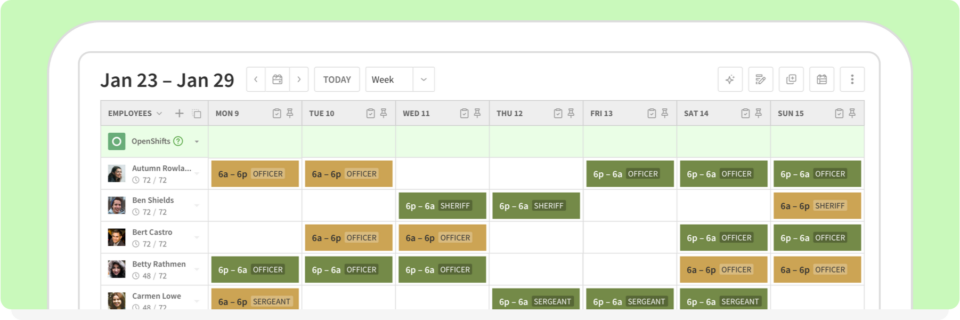
Common 12-hour shift schedules
The 2-2-3, Pitman, and DuPont schedules are all examples of common 12-hour shift schedules.
What is the FLSA?
The Fair Labor Standards Act is a federal law that protects workers and their pay. It does so by setting rules for wages and overtime pay. In particular, it requires employees to receive pay at or above the federal minimum wage. Overtime pay is also necessary if an employee works more than 40 hours in a week.
There are some exceptions to those rules, though. For one, the FLSA provides an exception for eligible healthcare employers. They can adopt the 8 and 80 overtime system. It involves eligible organizations adopting a fixed, 14 consecutive-day work period. Overtime applies if an employee works over 80 hours in those two weeks or over 8 hours in a single day. The employer gets to choose which variation to follow.
Most healthcare organizations adopt the 80-hour rule. That’s because nurses and many other healthcare employees often work rotating 12-hour shifts.
Who is covered by 12-hour shift labor laws?
The FLSA covers most employees in the U.S. That includes hourly workers and non-exempt salaried employees. Some exemptions include the following:
- Nurses and medical staff working 12-hour shifts in hospitals
- Factory workers in manufacturing plants
- Security guards working overnight shifts
- Caregivers in long-term care facilities
- First responders
These individuals are still entitled to overtime compensation. The difference is that their employers may use the 8 and 80 overtime system instead.
State laws for 12-hour shifts
The FLSA sets federal rules, but don’t forget to check your state (and even local) labor laws. Some states, like California, Washington, and New York, have different laws that may require daily overtime pay.
Overtime rules for 12-hour shifts
Several industries use 12-hour rotating schedules. The main reason for that is so they can stay operational outside of normal business hours. Here are three common examples and how the FLSA applies to them, including how overtime works:. Remember though, that state and local laws may require daily overtime after 8 hours, so check your local statutes to be sure you’re in compliance.
Overtime breakdown
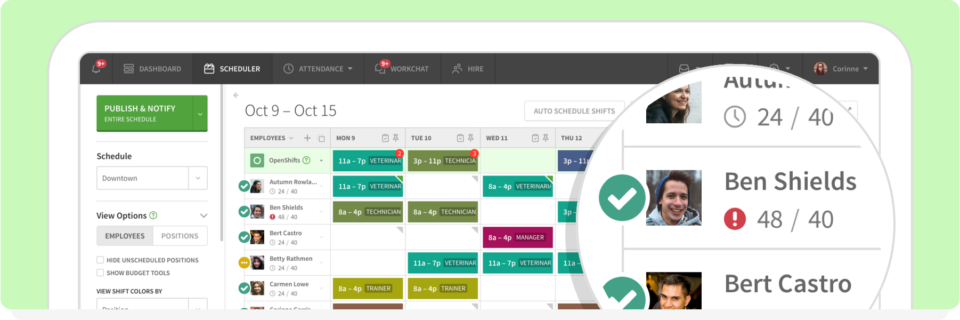
Weekly overtime means that any worked hours over 40 in a workweek has to be paid at 1.5X an employee’s normal payrate, which is overtime pay.
Some states specify that workers need to be paid daily overtime, which means that they would start being paid 1.5X their normal payrate after 8 hours worked every single day.
Healthcare
Let’s say a nurse works three 12-hour shifts per week. Their employer uses the 80 version of the 8 and 80 overtime system. In that case, the nurse would not earn overtime pay, even though they worked over 8 hours in one day. That’s because the nurse would only work a total of 72 hours in a 14-day work period.
Manufacturing
A factory worker scheduled for rotating 12-hour shifts may exceed 80 hours in 14 days. Let’s say they work rotating 12-hour shifts on a 2-2-3 schedule. They would work for two days, have two days off, then work three more days. That means they would work 84 hours every two weeks. And under the FLSA, they would earn four hours of overtime pay.
Long-term care
Long-term care facilities are subject to similar rules as hospitals. Thus, a nurse working at one would earn overtime if they exceed 80 hours in any 14-day work period.
Pros and cons of 12-hour shifts
The pros of 12-hour shifts are better around-the-clock coverage for your team, which is important for workplaces that run 24/7, like healthcare facilities. And 12-hour shifts tend to give employees more days off throughout the month. The cons, though, are that longer shifts can lead to fatigue and mistakes, as well as trigger daily overtime and increase labor costs.
See how scheduling software simplifies compliance. Start your free trial of When I Work today!
Examples of 12-hour shift compliance
Your business should follow FLSA regulations to:
Avoid legal penalties
Non-compliance can result in hefty fines and hurt your reputation with employees.
Ensure consistent labor costs
Ensuring the proper tracking of hours and overtime helps control your labor expenses. You can prevent unexpected payroll spikes and protect your cash reserves.

Increase profitability
Following the FLSA’s rules promotes workforce optimization. You can schedule your employees with greater efficiency. And that can help increase your profitability.
Improve recordkeeping
The FLSA pushes for strict recordkeeping. Use your labor records to stay audit-ready and identify cost-saving opportunities.
Common compliance challenges
Keeping up with the FLSA can be tough. These are some hurdles you may run into:
Tracking hours accurately
You must track and calculate overtime hours with great precision. That can be difficult if you are tracking hours by hand. Without proper timekeeping, you risk under or overpaying employees.
Related read: Multi-Location Employee Scheduling
Managing overtime costs
Following FLSA guidelines helps you cut back on overtime costs. But a lack of insight into your schedules can drive up your payroll expenses. You need a strategy to balance workload and control costs.
Avoiding employee fatigue
It’s true that 12-hour shifts can be great for your business. Yet they can also wear your employees down. Make sure your schedules provide employees with decent downtime to recharge.
Staying up to date with labor laws
Labor laws are always subject to change. Make sure you stay informed of both federal and state rules. Some states even have more rigid labor laws than the FLSA.
Track overtime and compliance easier than ever with employee scheduling software from When I Work and save 15 hours each week. Start your free trial today!
How employee scheduling software helps you stay compliant with labor laws for 12-hour shifts
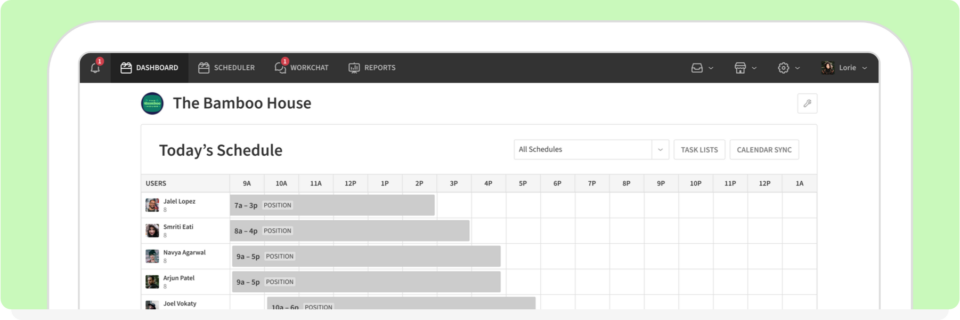
Employee scheduling software makes compliance easier. That’s because it automates things like:
- Time tracking
- Break management
- Overtime calculations
Use the software to pay your employees the right amounts. Top solutions like When I Work also provide better visibility into labor costs. With these, you can boost business efficiency.
Best practices for staying compliant with 12-hour shifts
When I Work has several great features to support FLSA compliance. Some top features include the following:
Overtime tracking and prevention
Manual overtime tracking can lead to labor law violations. When I Work provides automatic alerts when employees approach overtime limits so you can fix schedules as needed. Using real-time overtime alerts, a hospitality business can reduce its unexpected overtime costs by 20%.
Break and rest period enforcement
Breaks are required by law, but are hard to track. When I Work auto-schedules breaks and reminds employees of them. A healthcare facility can improve its break compliance by 30% with automated break tracking.
Multi-location compliance support
Managing compliance across many locations and labor laws is tough. When I Work allows you to set location-based compliance rules. A multi-state retail chain can eliminate scheduling violations by setting specific rules.
Automated record-keeping and labor audit readiness
Businesses need accurate labor records for audits and legal protection. When I Work tracks schedules, hours worked, and adjustments. Using When I Work reporting tools, a manufacturing company can pass a labor audit.
Minor employee scheduling safeguards
Employers must follow scheduling rules for minors. When I Work catches schedule violations by flagging minor employees and restricting shifts. A restaurant chain can reduce its compliance violations by 40% after automating minor scheduling rules.
When I Work doesn’t help with compliance alone; it can also save you up to 15 hours per week on scheduling. Imagine all you can achieve with that extra time!
When I Work helps you schedule your employees with ease
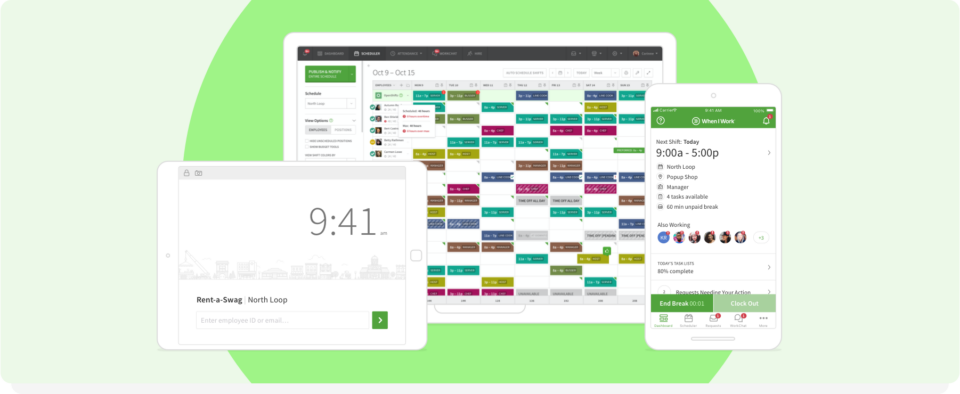
When I Work makes it easy to follow labor laws for 12-hour shifts. It’s also loaded with tools to promote efficiency and workforce optimization. Its team messaging app keeps employees in the loop about scheduling changes. And its time clock offers accurate hour tracking, which can help you stick to the FLSA’s rules.
Ready to modernize your scheduling processes? Try When I Work for free for 14 days now!
12-hour shift labor laws FAQs
Q: Are 12-hour shifts legal?
A: Yes, 12-hour shifts are legal. However, they may trigger daily overtime, so be sure you’re in compliance with all federal, state, and local labor laws.
Q: Do you get overtime after 12 hours?
A: Federal law states that you get overtime pay after you’ve worked 40 hours in a week. Anything over 40 hours puts you into overtime, so you’ll get overtime pay. Some states do have daily overtime laws that kick in after you’ve worked 8 hours, so depending on which state you’re in, the answer could be yes.
Q: What states have daily overtime laws?
A: Alaska, California, Colorado, Nevada, Oregon, Washington, and Wisconsin all have some version of daily overtime laws, but they vary among each state, so be sure to check all of your federal, state, and local labor laws to stay compliant.